
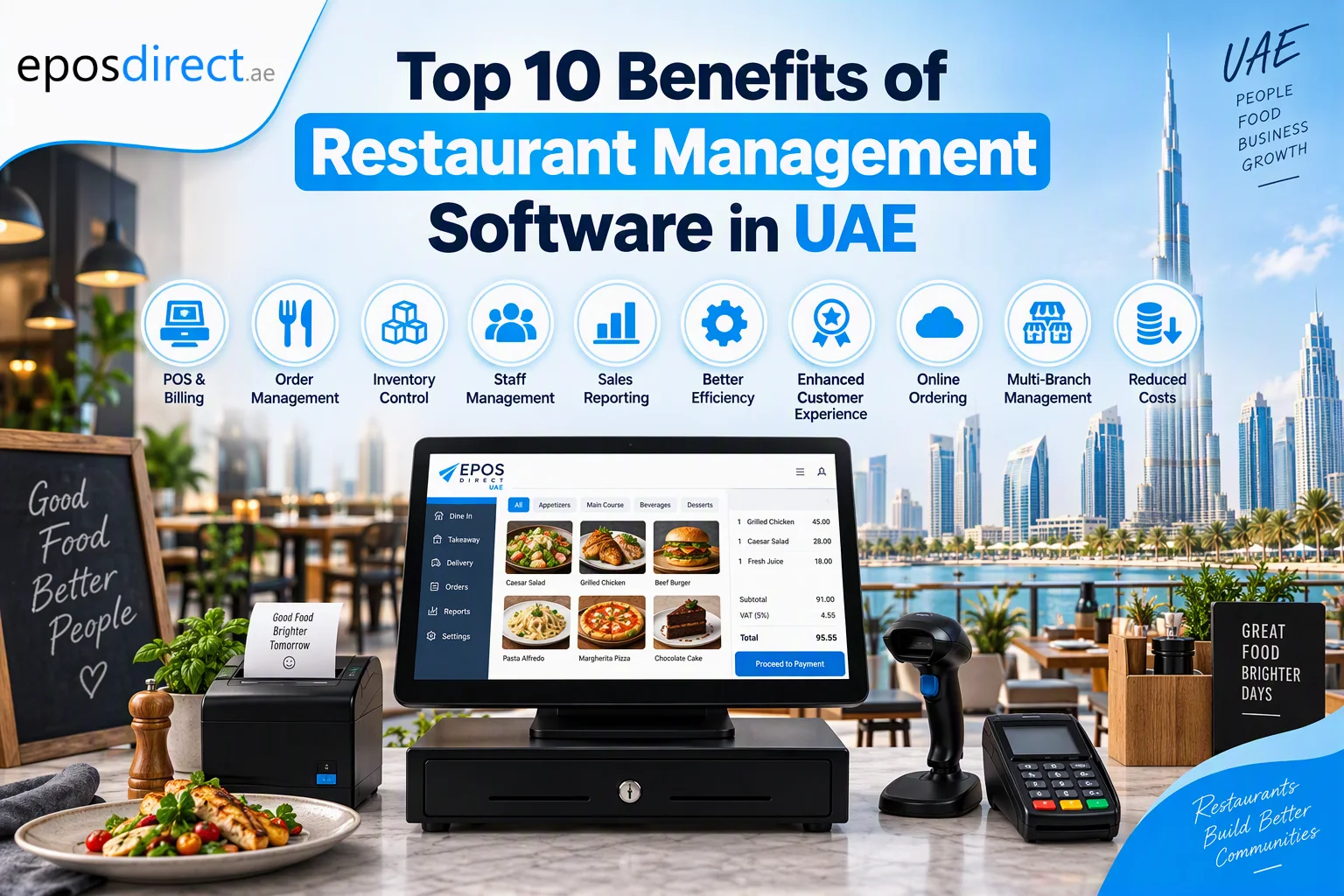
The restaurant industry in the United Arab Emirates (UAE) is growing rapidly, with restaurants, cafés, cloud kitchens, food trucks, and quick-service restaurants competing to deliver better customer experiences. Managing daily restaurant operations efficiently has become essential for business growth, profitability, and customer satisfaction.
Restaurant management software in UAE helps restaurant owners automate essential tasks such as point-of-sale (POS) billing, inventory management, order processing, employee management, sales reporting, and customer relationship management. With the right restaurant management system, businesses can reduce manual work, improve operational efficiency, control costs, and manage multiple restaurant locations from a centralized platform.
Whether you operate a small café in Dubai, a fine-dining restaurant in Abu Dhabi, a cloud kitchen in Sharjah, or a multi-branch restaurant across the UAE, choosing the best restaurant management software can transform the way you manage your business.
In this guide, we explore the top 10 benefits of restaurant management software in the UAE and explain how restaurant POS software can help improve efficiency, profitability, and customer satisfaction.
What Is Restaurant Management Software?
Restaurant management software is an integrated digital solution designed to simplify and automate restaurant operations. It combines essential business functions into one platform, allowing restaurant owners and managers to manage sales, billing, inventory, kitchen orders, staff, and business performance efficiently.
Modern restaurant management systems often include:
- Restaurant POS software and billing systems
- Inventory and stock management
- Menu and recipe management
- Kitchen Display System (KDS)
- Online food ordering and delivery integration
- Table reservations and order management
- Customer relationship management (CRM)
- Employee scheduling and access management
- Sales analytics and financial reporting
- Multi-branch restaurant management
For restaurants in the UAE, a suitable restaurant management system can help streamline daily operations while supporting local business requirements, multiple payment methods, and applicable VAT reporting workflows.
Top 10 Benefits of Restaurant Management Software in UAE
1. Faster Restaurant POS Billing and Payments
One of the biggest benefits of restaurant POS software in the UAE is faster and more accurate billing. Manual billing can lead to calculation errors, delayed service, and long queues during busy periods.
A modern restaurant POS system automates the billing process and enables staff to generate invoices, apply discounts, split bills, process refunds, and manage different payment methods according to the system's capabilities.
Restaurant billing software can also help businesses manage dine-in, takeaway, and delivery orders through a centralized interface.
Key benefits include:
- Faster checkout and payment processing
- Accurate order totals and invoice generation
- Reduced manual billing errors
- Better management of discounts and promotions
- Improved customer experience during peak hours
- More organized sales records
For restaurants in Dubai, Abu Dhabi, and other UAE locations, an efficient POS billing system helps employees serve more customers without compromising service quality.
2. Real-Time Restaurant Inventory Management
Inventory control is essential for maintaining restaurant profitability. Overstocking can increase food waste, while insufficient stock can lead to unavailable menu items and lost sales.
Restaurant inventory management software helps track ingredients, beverages, packaging materials, and other stock items. Depending on the system, inventory levels can update automatically as orders are processed.
Restaurant owners can monitor stock movement, set low-stock alerts, record purchases, and review supplier-related information.
Key benefits include:
- Real-time inventory visibility
- Better control over food costs
- Reduced food wastage and spoilage
- Improved purchase planning
- Easier stock reconciliation
- Better visibility into ingredient usage
For restaurants operating in the UAE's competitive food and beverage market, effective restaurant stock management software can help control operating expenses and protect profit margins.
3. Improved Order Management and Kitchen Operations
Accurate communication between the service team and kitchen staff is essential for smooth restaurant operations. Paper-based order taking can cause delays, misplaced orders, and confusion during busy periods.
Restaurant order management software sends order details directly to the kitchen through supported kitchen printers or a Kitchen Display System (KDS).
Staff can manage order status, monitor preparation progress, and coordinate dine-in, takeaway, and delivery orders more efficiently.
Key benefits include:
- Faster communication between the front of house and kitchen
- Fewer order entry mistakes
- Better kitchen workflow management
- Improved order preparation visibility
- More efficient takeaway and delivery operations
- Reduced delays during peak dining hours
A restaurant management system with kitchen order management capabilities helps restaurants improve service speed and maintain consistent food preparation standards.
4. Better Sales Tracking and Business Reporting
Understanding sales performance is essential for making informed business decisions. Restaurant reporting software provides insights into daily revenue, popular menu items, peak sales periods, and payment activity.
Instead of manually reviewing receipts and spreadsheets, restaurant managers can use dashboards and reports to monitor important business metrics.
Depending on the platform, restaurant analytics software may provide:
- Daily, weekly, and monthly sales reports
- Item-wise and category-wise sales analysis
- Revenue and discount reports
- Payment method summaries
- Staff performance reports
- Inventory and food-cost reports
- Branch-wise sales comparisons
For restaurant owners managing multiple outlets across Dubai, Sharjah, Abu Dhabi, or other UAE locations, centralized reporting can make it easier to identify trends and evaluate performance.
Accurate reporting also helps businesses make better decisions about pricing, promotions, menu planning, and operational improvements.
5. Reduced Food Waste and Operating Costs
Food waste and uncontrolled expenses can significantly affect restaurant profitability. Restaurant cost control software helps businesses identify areas where money may be lost and where operational improvements are needed.
When inventory management, recipe costing, purchasing, and sales reporting work together, restaurant managers can better understand ingredient consumption and food costs.
For example, recipe costing tools can help calculate the estimated ingredient cost of individual menu items. Comparing these costs with selling prices can help managers review menu profitability.
Ways restaurant software can support cost control include:
- Monitoring ingredient usage
- Tracking stock wastage and adjustments
- Improving purchasing decisions
- Reviewing menu item profitability
- Identifying unusual stock movements
- Reducing manual administrative work
Although software cannot eliminate every source of waste, it can give restaurant owners better visibility into operations and help them take corrective action.
6. Simplified VAT Reporting and Financial Recordkeeping
Restaurants operating in the UAE need to maintain appropriate financial records and comply with applicable tax requirements. Restaurant accounting and billing software can help organize sales transactions, invoices, payment records, and relevant tax information.
A restaurant POS system configured for UAE operations may support VAT-related reporting workflows, tax calculations, and invoice generation, depending on its features and configuration.
Potential benefits include:
- More organized sales and invoice records
- Consistent tax configuration across eligible transactions
- Easier access to transaction histories
- Simplified preparation of sales summaries
- Better coordination with accounting software
- Reduced manual data entry
Restaurant owners should confirm that their software supports their specific invoicing and recordkeeping requirements under applicable UAE regulations. Software reports do not replace professional tax advice or the responsibility to verify compliance.
Choosing restaurant billing software with suitable UAE VAT functionality can help businesses maintain better records and streamline routine administrative work.
7. Enhanced Customer Experience and Loyalty Management
Customer satisfaction plays a major role in restaurant growth. Long waiting times, incorrect orders, and inconsistent service can negatively affect customer loyalty.
Restaurant management software can help improve the customer experience by making order processing faster, keeping billing accurate, and maintaining organized customer information.
Some restaurant CRM and loyalty management systems also support customer profiles, loyalty points, promotional campaigns, and personalized offers.
Customer experience benefits include:
- Faster and more accurate service
- Better management of customer preferences
- Loyalty programs and rewards
- Organized promotional campaigns
- Improved handling of repeat customers
- More consistent service across branches
For restaurants and cafés in the UAE, customer loyalty features can help encourage repeat visits and strengthen long-term relationships with customers.
Any collection and use of customer data should follow applicable UAE data protection requirements.
8. Efficient Employee and Staff Management
Managing restaurant employees involves scheduling shifts, assigning responsibilities, tracking working hours, and monitoring service performance.
Restaurant staff management software can help managers organize these tasks from a centralized platform.
Depending on the system, features may include role-based access, shift scheduling, attendance tracking, sales attribution, and employee activity reports.
Key benefits include:
- Better staff scheduling
- Clearer employee responsibilities
- Role-based access to POS functions
- Easier attendance and shift monitoring
- Improved accountability
- Reduced administrative workload
For busy restaurants in Dubai and other UAE cities, organized staff management helps teams coordinate responsibilities and maintain consistent service during peak hours.
Restaurant owners should verify whether payroll, attendance, and workforce features are included or require separate integrations.
9. Seamless Online Ordering and Food Delivery Integration
Online food ordering and delivery are important channels for many restaurants in the UAE. Managing dine-in orders alongside orders from websites, mobile applications, and third-party delivery platforms can become complicated without an organized system.
Restaurant online ordering software can centralize supported order channels and reduce the need to enter the same order manually into multiple systems.
Depending on available integrations, a restaurant management platform may help synchronize menus, update order status, track incoming orders, and coordinate kitchen preparation.
Key benefits include:
- Centralized order management
- Reduced manual order entry
- Better coordination between delivery and kitchen teams
- Improved visibility into order status
- Easier menu and pricing management
- More organized takeaway operations
Before selecting restaurant software in the UAE, confirm compatibility with the delivery platforms, payment providers, and online ordering channels your business already uses.
10. Multi-Branch Restaurant Management and Business Scalability
Restaurant businesses planning to expand need systems that can support additional locations without creating unnecessary administrative complexity.
Multi-branch restaurant management software allows owners to monitor multiple outlets through a centralized platform, depending on the software's capabilities.
Managers may be able to compare branch performance, standardize menus, monitor inventory, review sales reports, and manage user permissions across locations.
Key benefits include:
- Centralized management of multiple outlets
- Branch-wise sales reporting
- Consistent menu and pricing controls
- Improved stock visibility across locations
- Standardized operating procedures
- Easier expansion into new locations
For restaurant groups operating in Dubai, Abu Dhabi, Sharjah, Ajman, and other UAE markets, a scalable restaurant management system can support growth while maintaining better operational visibility.
Before purchasing, check whether the platform supports centralized inventory, inter-branch transfers, consolidated reporting, and the number of outlets your business expects to operate.
Find the right restaurant POS for your UAE business
Compare our hospitality POS package or explore POS systems for UAE businesses. Contact our Dubai team to confirm the features, integrations and multi-branch requirements you need; not every capability discussed in this guide is included in every package.
Ask our local team for a restaurant POS demo on WhatsApp, or arrange a visit to our Dubai Silicon Oasis showroom.